Career guide 04
Golf-ball diver: recovery work where visibility disappears
Course ponds collect thousands of lost balls over time. Recovering them can support a resale business, but the work is commercial diving in contaminated, entangling and often near-zero-visibility water.
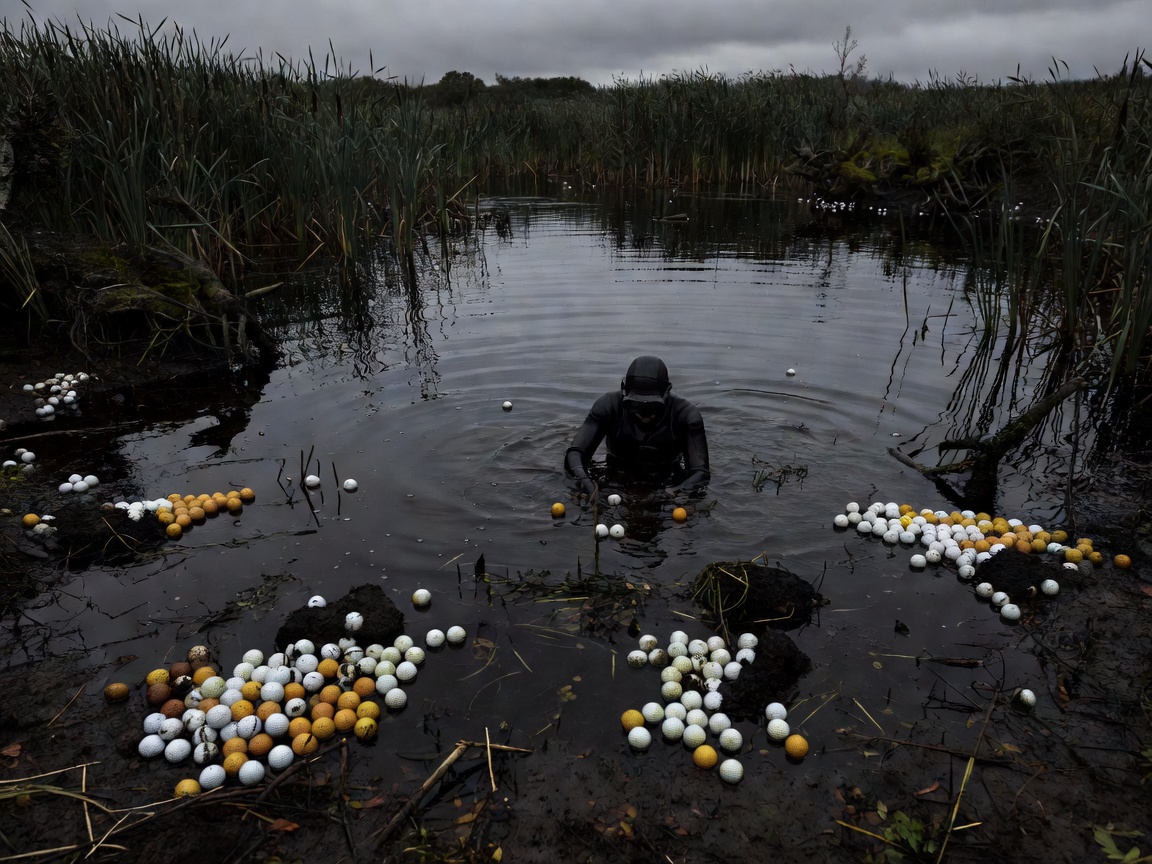
How recovery works
A recovery operator first agrees access and commercial terms with a golf course. Before entering the water, the team assesses depth, entry points, weather, water quality, course activity and underwater hazards. Diving should be coordinated so players and maintenance equipment cannot create additional risk near the site.
Underwater, visibility can be minimal. Divers often work by touch, moving systematically across the bottom and placing balls into a mesh container or collection system. Mud, weeds, fishing line, branches, pipes and discarded objects can snag equipment. Retrieved balls are heavy in bulk, so lifting and shore handling need planning rather than improvised effort.
After recovery, balls are washed and sorted by condition. Some can be resold for play, while heavily damaged examples may have little value. Revenue depends not just on the quantity collected but on brand mix, condition, cleaning costs, buyer demand, transport and the share owed to the course.
Training and legal requirements
Recreational scuba experience does not automatically qualify a person for paid underwater work. Occupational diving laws differ by country and sometimes by task. Commercial training typically covers surface support, communications, emergency procedures, equipment maintenance and worksite risk assessment in addition to diving technique.
A proper operation includes competent surface support; a diver should not work alone simply because a pond looks shallow. The team needs a dive plan, reliable communication or line signals, first-aid capability and an emergency response appropriate to the location. Insurance must explicitly cover the activity. Course permission does not replace regulatory compliance.
Equipment and conditions
Configuration depends on local rules and the site. Equipment may include exposure protection suitable for polluted water, gloves, robust footwear, a full-face system, surface-supplied air, communications, harnesses and retrieval containers. Choosing gear solely for speed or low cost can transfer risk to the diver.
Water may contain agricultural runoff, harmful microorganisms, sharp debris or wildlife. Cold, heat, poor footing and physical exertion add stress. Post-dive cleaning protects both equipment and workers. Operators also need procedures for cuts, damaged protective equipment and suspected exposure.
Advantages and drawbacks
Potential advantages
- A recoverable product can support repeat course contracts.
- Independent operators can combine diving and resale skills.
- Systematic work has visible, measurable output.
Potential drawbacks
- Low visibility and entanglement create serious hazards.
- Income changes with recovery quality and buyer demand.
- Cleaning, sorting and logistics continue after the dive.
Contracts, costs and income
Commercial arrangements vary. A course might receive a fixed access fee, a share of recovered stock or a percentage of sales. Operators must model fuel, labour, insurance, training, equipment maintenance, cleaning, storage and rejected inventory. A large pile of balls is not the same as profit.
Some divers work for established recovery businesses and receive wages or task-based compensation. Independent operators carry greater commercial risk and must find wholesale or retail buyers. Claims of effortless high earnings often ignore support staff, downtime, sorting labour and the limited value of badly degraded balls.
Due diligence before taking a contract
- Confirm ownership of recovered balls and the course’s written permission.
- Inspect each pond and document site-specific hazards.
- Verify occupational-diving requirements with the relevant local authority.
- Agree who pauses play and controls access around the work area.
- Estimate saleable grade, not merely the likely total number recovered.
- Set out payment, damage, cancellation and environmental responsibilities.
Golf-ball recovery is viable only when diving discipline and business discipline coexist. The strongest operator is not the person willing to enter the murkiest pond. It is the one prepared to decline unsafe water, price the entire process and build repeatable systems above and below the surface.